Monday, 7 March 2022

Of Arts and the Animal part 3


A Christian Essay in Aesthetic Value
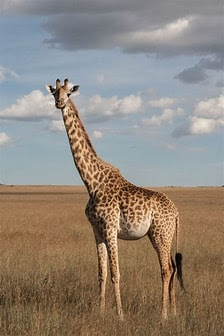
Whilst every creature represents God and communicates aspects of His essential attributes, we are alone in being made “to the image of God” (Genesis I 27, 1st lesson Holy Saturday). This entirely shapes our relationship with our fellow-creatures as their relationship with God is mediated through humanity, and our relationship with Him is determined by our relations with them. As God addresses us in them, He does not address us, His created audience, in the first instance; rather, He addresses Himself through us – he does not say “I giraffe you” but “I giraffe Myself through giraffing you” as human and giraffe are held in the heart of the Most Blessed Trinity and it goes deeper than that as the image of God in humanity brings the giraffe into the very centre of our being, our human nature. That which is in God is reflected in us, and that includes the idea from which each creature receives its nature, hence Adam knew the beasts and fowls by name as God brought them before him, and God related to them through Adam’s knowledge of them: He “brought them to Adam to see what he would call them; for whatsoever Adam called any living creature the same is its name” (Gen. II 19, Septuagesima Tues. Matins 2nd lesson). St. Robert Southwell writes:

“Man’s mind a mirror is of heavenly sights,
A brief wherein all marvels summèd lie”.

Thus, in the fall of Adam, the entirety of the corporeal creation fell, and all creatures are redeemed in the sacred humanity of Christ save only those rational creatures, people and angels, who wilfully reject redemption. It was, of course, in the fall that our ability to assimilate that which is communicated to us through our fellow-creatures was impaired to the extent that we are able to perceive so little in our ordinary dealings with them.

We are, however, able to relate to them, and through them to God, through our meditation upon them in the light of our ideas, our mental and moral concepts, and the powers of the soul, in which that which is in God, their creator, is reflected in us. In doing so we act in accordance with our primary vocation to participate in and to show forth the divine action, to ‘have dominion’ over other creatures by sharing in the action of the Lord. Thus, when we think about our fellow-creatures, whatever their species or nature, whether human, animal or inanimate, and whether considered in the concrete or the abstract, the particular or the generic, what we think about is our own nature, the nature of things, and the nature of the Creator of all that is. This meditation is conducted in a perfectly natural fashion by all of us as it is of our nature to act thus, even subconsciously, and when we imitate our Creator in this way, we find in ourselves the echo of this action as, in John Crowe Ransom’s words, “out of so simple a thing as respect for the physical earth and its teeming life comes a primary joy, which is an inexhaustible source of arts and religions and philosophies”. As we see that the created order is very good, goodness begets in us the desire to communicate goodness (which is, theologically speaking, a motion of grace, the action of the Holy Ghost), and so the artistic impulse is born; and in the image of the Creator we create, not, as He does, ex nihilo but from His creation and the image of it He created in us. In the practice of the arts we take possession of the world, and we take possession of ourselves, of the image of the divine that constitutes us as human. In his ‘Letter to Artists’ St. John Paul II tells us that “Every genuine art form in its own way is a path to the inmost reality of man and of the world. It is, therefore, a wholly valid approach to the realm of faith, which gives human experience its ultimate meaning.”

To understand the arts in this light is to grasp a sense of purpose from which a scale of aesthetic values may be extrapolated; and that enables us to pass an objective judgement, giving a context to the subjective reactions we feel when confronted with the artistic endeavours of others. Art may be good or bad, it may succeed or fail in its own terms, precisely as art. I ought, perhaps, to mention at this point that 2013’s Reith lectures were on the subject of art and were delivered by Grayson Perry, but this essay-article is neither a commentary upon nor a response to his talks, which are worth reading if you did not listen to them. The only comment I will make is that he was dealing with the visual arts whilst I am discussing the arts in general, and that much of what he has to say is really concerned with comparatively superficial questions of public attitudes towards art and artists rather than the philosophical and theological issues under consideration here.

To be continued...

By Prayer Crusader St Philip Howard


Monday, 14 February 2022

A Synod for the media or the Church?


Orthodox Catholics should get involved in the Synodal Journey

Here are some thoughts on what this synod is all about:

As Christians we are called as an act of charity to welcome and accept everyone, however the key word is "Christian". A Christian is a disciple of Jesus Christ and a disciple therefore must be disciplined in the ways and teachings of the Catholic Church.

What is true Christian Love and Charity?

Charity toward all mankind no matter who or what they are is what I believe to be the governing factor in how the Holy Spirit is moving us. However, what is the best way to show true love and welcome all into the Church?

If we do not remain true to the faith will the Church die?

It has been noted many times that when the Catholic Church or any other Church does not follow the teachings of Jesus Christ and His Church it loses members and closes churches. This can be seen very clearly in the Anglican church; the ordination of women and an acceptance of homosexual acts has not made this denomination attractive particularly to the young but has repulsed many of them. The Methodist church as well has been split down the middle by actually carrying out same-sex blessings and again have had to close churches and lost members. The Anglican Church plan to close 400 churches in the next decade, they have closed 1000 in the last 30 years, this church used to claim 40% of England population it is now down to 12%.

How can the Church truly welcome and accept everyone?

The Catholic Church can show that it welcomes and accepts everyone by being faithful to the Gospel of Jesus Christ and teachings of His disciples. Jesus said, "go forth and teach all nations." Some translations of Matthew 28:19 says, "Make disciples of all nations". Therefore, we are asked by Jesus Himself to teach and make disciples of all people, to be a disciple one must be disciplined and follow the teachings. Therefore, we can only truly love, teach and welcome everyone into the Catholic Church by being faithful to her teachings, including by following her teachings on an all-male priesthood, that homosexual acts cannot be accepted and the teachings on contraception and abortion must be affirmed. The liturgy too must be respectful and create a sense of the sacred whether in the New Rite or the Traditional Latin Mass. Traditionis Custodes should be modified or abandoned as it gives the impression that faithful Catholics who have an attachment to the Latin Mass are not welcome and accepted. I believe that the Holy Spirit is showing us by the huge growth in people (particularly young people) attending the Traditional Latin Mass that this liturgy and traditional family values are the way forward for the Church.

What is true Christian welcoming and acceptance?

Homosexuals in the Priesthood have caused great harm. This is not an assertion but a fact, for in study after study where the Church has been in crisis due to child sex abuse has shown that over 80% of the abuse has been of a male-on-male nature therefore homosexual. Studies throughout the world particularly in England, France, Germany, and the USA have proved this, therefore Homosexuals should not be allowed into the priesthood, even if they are celibate for Jesus says in the Lord's prayer "lead us not into temptation". And yet women or married priests are not the answer as Jesus our great high priest was a celibate man as were all of his apostles. The blessing of same-sex couples in Catholic Church as proposed by the German church is not compatible with both the Old and New Testaments and the entire 2000-year history of the Catholic Church.

If the Synod on Synodality does anything, it should correct the German Synodal way, and expose those ideologues as heretical and damaging to the Church. The German Church appears to have too few faithful Catholics and too much money which is raised through the secular tax system. A Church that has corrupted the teachings of Jesus Christ and His Church is not welcoming and accepting but on the contrary repulsive. It is a true act of Christian charity and love to be faithful to the teachings of the Church and not of the world.

Here is the link to the Bishop's Conference of England and Wales website for the Synod Contacts, please see who your contact is:

https://www.cbcew.org.uk/diocesan-synod-contacts/


Here is the Christian Rising video in which we discuss the Synod: 

https://www.youtube.com/watch?v=BcnVnyLsDYs


Here is their hideous (rainbow flag resonating) logo:


Friday, 11 February 2022

Of Arts and the Animal part 2

 A Christian Essay in Aesthetic Value

The divine simplicity contains in itself all complexities. The creature does not represent God merely in a generic sense, the richness of the divine perfection is such that it is not exhausted although every creature ever created communicates unique aspects of the divine essence in the very haeccitas that constitutes it an individual creature distinct from all others. This is true of you and me and the tree on the corner; whilst, unlike her Calcutta cousin, the Lord’s pavilion cat makes no claim to be divine, she is shot through with divinity in every aspect of her being and dwells ever in the divine presence, sharing with the redeemed in the ‘liberty of the glory of the children of God’ (Rom VIII). Furthermore, she and the Mountains of Mourne, as words of God entirely contained within the Eternal Word, find their place at the heart of our faith as we kneel before the Eucharistic presence of the Blessed Sacrament.

What does all of this mean for us, who stand within the created order as the audience God has created for the communication He offers in His creation? To start with it enables us to find our place in the world, to orientate ourselves, which means to know where we stand in relation to Christ the Oriens, O Oriens, splendor lucis aeternae, et sol justitiae: veni, et illumina sedentes in tenebris, et umbra mortis. O Dayspring splendour of eternal light and sun of justice come and enlighten those sitting in darkness and the shadow of death (commemoration at 2nd Vespers of St Thomas 21 Dec).

We begin by acknowledging that we are by nature utterly dependent upon the things of this world and see that this dependency is a sacramental symbol of the manner in which we are sustained by our Creator and theirs. We receive from Him not only that which makes our way of life possible, our daily bread, but that life itself, our human nature, and our existence.

The first consideration arising from this is that in our limitations and our dependence upon the divine bounty for all that we are and all that we need we are truly very nearly nothing at all; each of us is but a little gobbet of something delineated against the world (and still more, against a nothingness we can hardly imagine, but into which all creation would resolve itself were it not subject to God’s constant care). The second consideration is of the divine fruitfulness from which we have received and continue to receive all things, on which account we may be confident that we shall continue to receive still further blessings as we take our place in the reception and communication of the divine goodness. Turning from the dogmatic to the ascetic, we learn from St Bonaventure’s great work on the spiritual life the Itinerarium Mentis ad Deum, that meditation upon these twin considerations is the highest form of prayerful contemplation because by enabling those who would reflect upon the attributes of God to understand this world of creatures, their own environment, in terms of the action and manifestation of the divine goodness, this ‘cherubic meditation’ allows them to see and to relate to God in all things and through all things, dwelling (like Puss) always in His presence until, finding Him in themselves and themselves in Him, they may reach the heights of a mystic union with God that goes beyond all conscious thought and holds them even in this life as close to the throne of heaven as the seraphim. The life of St Francis was spent in precisely this meditation upon the divine seen through the natural; “led by the footprints he found in creatures he followed the Beloved everywhere” (Vita St. Francis by St. Bonaventure quoted in St. John Paul II’s Letter to Artists). It is this reflection upon the divine bounty and the contingent nature of our existence that gives meaning to the evangelical counsel of poverty, enabling those of us who are not monks or friars to share in the spirit of their vows, developing a sense of detachment from that which belongs to the divine bounty so that it serves us in its usefulness rather than have us serve it in our vanity – the liturgy gives us St Dominic for our example as it speaks of his crossing the wave of vanity in the ark of poverty for the welfare of the people. “In fiscella paupertatis flumen transit vanitatis, pro salute populi” (Dominican Missal).

            The prerequisites for such a meditation are, clearly, that one should be able to appreciate one’s own utter dependence upon the gifts of the divine bounty given through the natural world rather than believing in a mythical self-sufficiency of technological progress; and also the possibility of relating to our fellow creatures of every species in a direct, personal and unmediated fashion in order to receive the divine self-communication in them rather than simply to reinforce an artificial narrative derived from our own intellectual constructs. I will leave it to you to decide how far our media culture militates against the fulfilment of these prerequisites and move on to my next point.

To be continued...

By Prayer Crusader St Philip Howard

Friday, 4 February 2022

Of Arts and the Animal - Part One


 A Christian Essay in Aesthetic Value

 Aesthetics is the science of beauty and the arts, which are generally regarded as utterly trivial matters. If people have anything at all to say on the subject it is usually to deny the importance, or even the possibility, of making aesthetic judgements: “beauty is in the eye of the beholder”, “to each his own”. I would, however, contend that a theological appreciation of the nature of art allows us to grasp that the arts are at the centre of the human vocation; and that a philosophical understanding of the purpose of art enables us to see that aesthetic judgements are not merely possible but spiritually and intellectually essential. The television question must be viewed in this light.

To begin at the beginning: Animals and the environment are media staples and subjects of popular discussion, and they have already made an appearance in the CUT Newsletter, but further examination is necessary for people to understand that they are in many ways key to our concerns.

What is a creature? It is that which God has created, an expression of the divine creativity brought into being by the divine will; it is a word of God spoken into the cosmos of His creation to be received by the audience He creates within the cosmic whole, by which I mean us. It is a communication, a self-revelation of the divine by which God makes Himself known to us, and not only to us, but in us and through us. It is a semantic unit irreducibly complex in its totality, whatever strands of meaning might be discerned within it; the rabbit is more than the sum of his ears and whiskers.

Whilst God certainly addresses us through His creation, He does not do so in a simple manner, which is to say that He does not, like a Laputan professor, present us with things for want of any spoken or written language with which to represent them. Rather, in the act of the creation, of communication or expression, the created order in which we are born is drawn into the circumincessionary heart of the Most Blessed Trinity, into the intimacy of the Godhead: it is not that a creature is given to us instead of the word that might represent it, but that it itself is the word by which God represents that which is of Himself. The creature we see makes present to us in the concrete that which in the ideal is found perfect in the ever-fruitful goodness of God. It is a word spoken into, and contained within, the Word in which all things are created in the reflection of the Father in the Son (Col. 1, 16:19) and expressed into the created order through the power of the will to action, the desire, the love that, proceeding from the Father through the Son, is the Holy Ghost. It makes manifest that the absolute good reflected in the absolute good is not self-contained in goodness, that God is not limited by His own completeness-in Himself, but is absolute in fruitfulness, for to be good is to wish to communicate goodness. The divine simplicity contains in itself all complexities. The creature does not represent God merely in a generic sense, the richness of the divine perfection is such that it is not exhausted although every creature ever created communicates unique aspects of the divine essence in the very haeccitas that constitutes it an individual creature distinct from all others. This is true of you and me and the tree on the corner; whilst, unlike her Calcutta cousin, the Lord’s pavilion cat makes no claim to be divine, she is shot through with divinity in every aspect of her being and dwells ever in the divine presence, sharing with the redeemed in the ‘liberty of the glory of the children of God’ (Rom VIII). Furthermore, she and the Mountains of Mourne, as words of God entirely contained within the Eternal Word, find their place at the heart of our faith as we kneel before the Eucharistic presence of the Blessed Sacrament.

Friday, 21 January 2022

Spiritual Combat and the Prayer Crusader


Spiritual combat


The Catholic Truth Society (CTS) has recently published a booklet called Spiritual Combat according to St. Benedict. Raphael’s painting of St. Michael overcoming the devil appears on the cover. All CUT members are asked to be prayer crusaders, and all are familiar with the image of St. Michael, sword or spear in hand, triumphing over a fallen and sprawling Satan. Each of us has our own chosen Saint or Blessed who fights alongside us, with reference in particular to satanic influence over the media and the entertainment industry. This booklet, written by a French Benedictine monk, explains how such spiritual combat must be undertaken. 

 Father Bernard identifies three “breaches” in the integrity of the soul, through which Satan can attempt an entrance in order to disrupt and weaken the spiritual life of each human person. The “breaches” he also calls “wounds”, areas of weakness and vulnerability. All three breaches (unless closely watched and strongly defended) allow Satan to seize on and distort desires which are in themselves natural and indeed essential to human nature and human living.

 The first breach relates to the need for well-being, for pleasure and security in such things as food, shelter, comfort and sexual relationships. In his encounter with our Lord in the desert, Satan tried to exploit this breach when he tempted our Lord to create bread for himself after his forty days’ fast.

 The second breach relates to the natural human desire to be recognised, loved and approved, - in early life by parents, later by wider family, friends, work colleagues, neighbours and those with whom we share a culture. Thus we form and develop relationships of love and positive regard whereby we support and are supported by others. Satan seeks to twist this into a desire to be admired and held in high esteem for our own dubious profit and benefit. Satan suggested to Jesus that he throw himself down from the highest pinnacle of the temple in order to gain the acclaim of crowds of people who would see the angels coming to save him from harm.

 There is a human need to create, to plan and to organise. This is at the root of all human endeavour, from making a shopping list to designing a cathedral. The breach which Satan here seeks to exploit is the need for control, for power, for domination. He showed Jesus the whole world, spread out around and below a high mountain: “All this can be yours” he said,  but Jesus again rejected the temptation.

 Spiritual combat consists in discerning the perversions that Satan is attempting to work in us, and indeed has already worked to some extent, and in redirecting our desires to God and to the unselfish love of the people around us.

 In the second half of the booklet, Father Bernard examines factors which make spiritual combat more difficult for us. The influence of the culture in which we live, and of negative incidents in individual lives, can weaken the soul’s ability to discern what Satan is doing in the soul. Father Bernard goes on to consider the nature of Satan, the Adversary, the Divider, himself. He “deceives, worries, divides, separates from God and others...” and “divides the heart against itself”. Within many areas of life, Satan does little, since he need only “complacently watch the agents acting on his behalf”, among whom, as prayer crusaders know, are those dominating the mainstream media, the entertainment industry, and huge swathes of the internet. Among monks, however (the author himself having been a monk and indeed Abbot of his community for twenty years), these “agents” can make little headway, so Satan sends “a hundred devils” to tempt the monks in far more subtle ways. Since prayer crusaders often live lives withdrawn from the more obvious occasions of sin and are readily on their guard against the temptations of mainstream culture, they may perhaps be compared to monks and need to be prepared to search for satanic influence hidden in unsuspected areas of their lives. Essentially, spiritual combat is conducted in each individual heart, where lie “the roots of doubt, despair, indifference, violence or hatred”. Satan can only enter from outside, and may reach deeply into the individual, but it is possible (often with another’s help) to discern which breach he entered by. The Holy Spirit, by contrast, operates in the depths of the heart where “his peaceful action pacifies, purifies, enlightens and builds up”.

 Spiritual combat is carried out by means of prayer, the sacraments (especially the sacrament of penance), works of charity, and contemplation.         

 Father Bernard quotes several times from Saint Augustine, and also from Venerable Madeleine Delbrel.

By Prayer Crusader St Thersea of Avila 

Thursday, 13 January 2022

unvaccinated are not the problem

 The Perfect Covid Storm


Covid 19 or the China virus as some call it has been among us now for nearly two years with no sign of it ending. In fact it may have started in China around the time of the Pachamama shame episode at the Vatican - Pope Francis take note and perhaps a procession of reparation around the Vatican is needed to ask God's forgiveness.

 If vaccines are working, then why are they not working?

And yet we were led to believe that vaccination would end this pandemic. However, now it's the vaccinated who are catching and spreading the disease and since August 91% of Covid-19 deaths have been among the fully vaccinated, reports the Expose website. Yes, there are a disproportionate number of the un-vaccinated in hospital but not the majority, for they are the vaccinated.

 Experts call these breakthrough infections with those who are vaccinated actually getting Covid - why? Are we in fact causing a perfect Covid Storm and the vaccine is causing a spike in Coronavirus protein leading to mutations of the virus and death: we ask the question, is this because of vaccinations? Again, it's the left/liberal Main Stream Media (MSM) that is not only causing panic they are ignoring the dangers of the vaccine that can cause blood clots and heart problems. They ignore the fact that amongst professional footballers two major stars have had their career ended by heart problems that happened after taking the jab, of course the MSM and medical world are disparaging this fact and yet heart problems and deaths are much higher in younger athletic men than before the vaccine. In fact there is a spike in deaths in young men that cannot be explained.

 Those pushing the vaccine with an almost totalitarian zeal are beginning to use the rhetoric of the 1930s against the unvaccinated. Tony Blair, (he who took us to war under false pretences in the Middle East and stirred up an Islamist hornets' nest in the process) call the unvaccinated "irresponsible idiots". The arch-heretic-"bishop" of Canterbury (who has let paedophiles run riot in his cathedral) said it is "immoral" not to have the jab and that Jesus would have had it - to that I say you are talking rubbish, your reverend! Lawyers for the sex abused victim say "Archbishop" Welby must face disciplinary action.

 Being vaccinated does not turn you into supermen.

Yet it is the unvaccinated who still get the blame, the unvaccinated being victimised by society. Are they really in fact the innocent victims of the Covid- spreading vaccinated? Just because you are vaccinated you can now join the huge crowds at football matches, raves and night clubs - where ahhh ... they spread Covid among the other vaccinated. And according to the idiot PM of New Zealand take part in orgies. You may think that my associating the jab pushers with Nazis is a bit OTT; take a look at Australia who are actually building concentration camps and putting the unvaccinated in them - have we learnt nothing?

 The Vatican under this arch heretic pope Pachapapa Francis (I am so ecumenical), are sacking people who do not have the vaccine, such a Christian thing to do. Perhaps those poor people who have lost their jobs should be grateful that they will not have to mingle with the vaccinated, you never know who the real spreaders are. At the moment the full force of the authorities and the media point the finger only at the unvaccinated.

 Why are the most vaccinated countries having the most cases of Covid?

Countries with high vaccinated proportions of their populations are proud of their efforts and are looking to push it to other lower vaccinated counties. However, people with one two or three jabs are getting Covid and passing the virus on. Israel is now on its fourth jab, and called by Yahoo news the "Ultra-Vaxxed" have major Covid crisis on their hands. Why are the countries with lower vaccine rates getting lower Covid rates?

 Is catching omicron less dangerous than having the vaccine?

Although the Delta variant is still around the most common is now the Omicron, which spreads quicker but is less dangerous. Therefore, is it better to get Omicron than to have the vaccine? The inventor, yes INVENTOR! of the mRNA "Vaccine" Dr Robert Malone has gone on record as saying young children should NOT be given this treatment as it is not actually a vaccine at all but gene therapy. However, the good doctor has been flung off twitter and the media in general will not report on him.

 I'm not against vaccines

I'm not against vaccines so no one can label me an anti-vaxxer but I will never have a jab that has been tainted by an abortion either in its testing phase or actually having been made using foetal cells. Therefore, none of the current vaccines are ethical for a Catholic to take, forget the vaxx fanatics who say it's an act of love to do so - rubbish! It's the vaccinated who are passing on the virus so that argument falls flat on its face.

 Yes, it's the irresponsible actions of the vaccinated that are spreading Covid and the unvaccinated are the victims in more ways than one.

By Prayer Crusader St Philomena

Thursday, 30 December 2021

Pope Ozymandias


Prayer Crusader St Cecilia writes:

It is astonishing what you discover browsing in the highways and byways of English literature. Who knew that the poet Percy Bysshe Shelley forecast the disastrous results of Padre Bergoglio’s papacy over two hundred years ago? I refer to his sonnet misleadingly entitled ‘Ozymandias’:


I met a traveller from an antique land

Who said: Two vast and trunkless legs of stone

Stand in the desert... Near them, on the sand,

Half sunk, a shattered visage lies, whose frown,

And wrinkled lip, and sneer of cold command,

Tell that its sculptor well those passions read

Stamped on these lifeless things, the hates, the hopes,

The hand that mocked them, and the heart that fed:

And on the pedestal these words appear:

“My name is Père Bergoglio, Pope of Popes:

Look on my works, ye Mighty, and despair!”

Nothing beside remains. Round the decay

Of that colossal wreck, boundless and bare

The lone and level sands stretch far away.


Shelley might have been a notorious atheist but self-evidently he had more foresight than a certain pope I could name!