Friday, 29 April 2022

Of Arts and the Animal 7

 A Christian Essay in Aesthetic Value


There is a category of works that give every appearance of being figurative, and that is narrative and descriptive works – novels, opera, ballet and so on – the truth, however, is that no narrative with a serious artistic purpose, or any aesthetic merit, is truly concerned with its ostensible subject but always addresses itself to the abstract ideals I have already mentioned. The ‘weasel under the cocktail cabinet’, the moral beast exposing whited sepulchres, is found with the Lamb in the tabernacle. The subject itself is utterly trivial; who can care what happens to fictitious people if their story illustrates nothing beyond themselves; if they are to hold any interest at all, it can only be because the narrative is packed with incident and sensation. Thus we distinguish ‘quality’ literature from the penny dreadful or pornography, and ‘legitimate’ theatre from grand guignol.

We may also see that the soap opera is a peculiarly low form of narrative; whilst the creation of the series involves a measure of artistry, to write an open narrative, without artistic purpose or resolution, in which the parameters of the characters are given in advance, appears to thwart the purposes of art by excluding self-communication or moral expression. On the subject of pornography, I should note that the legitimacy of representations of sexual matters depends upon two things, their place within the totality of the artistic concept, and whether the chosen medium and form are such that the representation is liable to being received in a discrete manner to the detriment of that total artistic vision. Hence a sexual act intrinsic to the purpose of the narrative, illuminating some moral truth to a high degree when depicted in balanced prose or music becomes pornographic when represented naturalistically on film or on stage: the Tristan chord does not titillate. Narrative genre is irrelevant to the question of value or quality. Humorous works are often altogether ruled out of consideration as artworks, but who could discount The Merry Wives of Windsor or Albert Herring? P.G. Wodehouse (a distant relative of Cardinal Newman’s) was as important an exponent of modernism (the literary style rather than the heresy) as T.S. Eliot: the intellectual landscape through which Bertie Wooster so breezily strolls is very much a Waste Land of the remains of a forgotten faith, the ruins of classical civilisation, and the wreckage of English letters.

My final observation with respect to narrative forms concerns music. The final verdict in Richard Strauss’ last opera, Capriccio, is that no verdict is possible in judging whether words or music takes precedence, prima le parole dopo la musica or vice versa. If both are artists, both writer and composer have artistic concepts or visions of their own, complementary but separate; it is a different matter entirely when a composer merely illustrates the drama, and his or her work is carried out at the service of the director’s artistic vision in the same way as the work of a cinematographer, a make-up artist or a set designer – this is music as craft rather than art.

The religious nature of artistic practice is evident also in that it is a search for truth, which is a search always for God Himself Who, incarnate in Christ proclaims that He is “The way, and the truth, and the life” (Jn.XIV 6). This search for truth is inherent in the nature of the artistic act as an act of communication; meaning must be, if not grasped, at least grasped at if it is to be conveyed. Artists such as Piet Mondrian and Wassily Kandinsky have equated their portrayal of universals, the divine ideas to which I have referred, with ‘the spiritual in art’, and Henri Matisse affirmed “the act of pure painting is a search for the absolute”.

By Prayer Crusader St Philip Howard 

Sunday, 24 April 2022

Of Arts and the Animal Part 6

 A Christian Essay in Aesthetic Value

Continued...

The final criterion is that the work should be judged as a communication about God. Because they are simply correlates of the purpose of art as an act of communication, secularists will accept the other two criteria if not all that I have said with respect to them; this third criterion, however, leaves even many religious people somewhat puzzled as they do not see how or why a work on a non-religious theme can or should be judged in these terms. I have already said that because the artist and any subject are creatures, and every creature is an act of divine self-communication, any communication concerning them is necessarily a communication about the Creator, but there is more to be said on the subject than that. Because the artistic act is an act of love it is a participation in that which is intrinsically divine as well as in the divine action: “Ubi caritas et amor est, ibi Deus est. Where charity and love is, there God is” (Maundy Thursday antiphon at the Mandatum). Furthermore, the nature of the artistic act is of a religious nature, and those who dedicate themselves to the practice of the arts are universally regarded as being engaged in an essentially spiritual occupation with something of a shamanic character to it in its search for inspiration in the inner vision of the underlying truth of things, of creatures and artefacts.   Richard M. Weaver took the position that poetry is always religious in character because poetry works by a system of metaphor and analogy relying upon an underlying level of reality in which the creation indicates the Creator by a universal analogy. He says that poetry on any assumption other than that of there being an immanent level of reality would be an anomaly. Quite so, but I would go further and say that any artistic practice in the absence of a living faith is anomalous because the artistic act amounts to an affirmation that that which is created is freighted with meaning indicative of the substance of its creator; how then can those who create from created elements deny that those elements are already endowed with meaning and significance by the Creator who creates ex nihilo? This might, perhaps, be an opportune moment to comment on the fact that, because all artists use that which already exists, there can be no legitimate basis for denigrating the use of ready-mades in the visual arts or musique concrète in composition. Writers use existing words and composers existing scales, indeed those in the performing arts generally work exclusively with ready-made material. We may judge the performing arts purely with respect to the depth of the passions displayed within the scope of the piece performed; even in the process of illuminating its shortcomings, a fine performance can transcend mediocre source material. We may judge the depth of our encounter with the artist and the subject matter in the work, and whether the mystery of the divine reflected in them is made palpable.


We may judge also how far the work preserves or obscures the meaning inherent in the substance whereof it is fashioned, and whether the meaning with which it is endowed by the artist is in accord with that which belongs to its essential nature. So far I have discussed the subject of the work only with respect to cases where that subject is another creature, and have mentioned non-figurative representation. There is a class of non-figurative works explicitly devoted to the exploration of the substances from which they are fashioned – the word, the sound, the paint, the canvas – and it is quite common for critics and theorists to discuss such works in explicitly religious terms because these works form a bridge between works addressing a creature as subject and works the subject of which is either an abstraction from some aspect of human or more broadly creaturely existence, or else some ideal such as balance, beauty, transcendence, truth, goodness, meaning or justice. Any work addressed to such an idea as subject is implicitly religious in its nature because these ideals are qualities through which the divine is made manifest to humanity, but the critics and ‘ordinary’ members of the audience are not wrong to perceive the wider class of non-figurative works as religious as every work that succeeds in presenting people with the depths of the artist’s being is an icon of the divine image whether or not it is figurative in nature. That is to say that every successful work is, ipso facto, endowed with a perceptibly religious or spiritual character; so there is no need to discuss works on religious themes as a particular case, other than, perhaps, to note that as the work or performance reflects the moral depths of the artists involved, it is best that they should be of an impeccable character, as St. Pius X demanded of Church musicians in Tra le sollecitudini , although biographical studies show this desideratum to have been honoured often in the breach. The only work whose religious nature sets it apart for special mention is the liturgy, which is both an art work in itself and the subject of music and the decorative arts. The authentic liturgies of East and West communicate to us the holiness of our forebears in faith in the age of saints, but later liturgies were consciously created to embody the ideological propositions of their authors and put forward their ideas rather than to reflect a faith already lived and a truth already possessed. When other arts are applied to the liturgy as their subject it is essential that the artist should grasp the dogmatic truths involved and the nature of the sacraments as sacred signs effecting that which is signified. In the liturgical arts the act of self-communication must be preceded by a radical self-alignment with the purpose of the liturgy, the sanctification of humanity through the redemptive action of Christ, if that purpose is to be achieved. The icon writer must first fast and be consecrated to the task by a priestly blessing. An artistic failure regarding the liturgy can thwart that purpose, and actively militates against the subjective reception of the graces objectively conveyed by the sacramental sign.

by Prayer Crusader St Philip Howard

Saturday, 16 April 2022

The Media and the War - 23rd Crusade of Prayer

 The First World Woke War

The Western Main Stream Media and the cause of the war in the Ukraine

First let me say I am in no way supportive of the Russian invasion of the Ukraine, this can hardly be described as a just war. The destruction, the bombing, the killing are just appalling. However, who is to blame, is it just Russia? Have the west, or NATO, the EU or the media any guilt here? Well, all are to blame let us not mince our words; the western governments and in particular the western main stream media have been baiting Russia for years. Why? After all the Soviet block is long gone and the cruel communist ideology has been replaced by Orthodox Christianity; Russia’s leader Vladimir Putin (for whatever reasons) has been promoting and supporting the Church in Russia, and in many areas Russia has come to resemble a western Christian country, if not a democracy.


Well I believe there are many reasons why the west do not want this form of Russia to succeed. Russia is a very big country, it has enormous oil and gas supplies, a huge military and of course Nukes. But these are not the real reasons (or rather not the main reason) the west and in particular western main stream media hate Russian. Russian Christianity and its restrictions on the homosexual and LGBTQ+ promotion are an important factor in Western hatred if Russia. This and its conservatism in family matters. However, why has Russia invaded the Ukraine, a sovereign nation?

Recent history.

Some of the Ukraine's territory was given to it by the Soviet Union during the communist era; these are actually Russian speaking lands and include the Donbas and the Crimea. When the Soviet Union broke up in 1990 Ukraine declared independence and along with the Russian speaking areas formed modern Ukraine. Gorbachev agreed to a unified Germany being part of NATO provided the other former countries of the Soviet Block remained neutral or unaligned. This did not happen and most of the countries joined NATO, which Russia believes to be a direct threat.

In 2014 the pro-Russian PM Viktor Yanukovych was over thrown during the Orange Revolution (the Yanukovych election was pronounced to be fraudulent by later courts). The Orange Revolution has is claimed to have been fuelled by the CIA, Soros Foundations and the anti-Russian media, both in the Ukraine and abroad.

Vladimir Putin claimed that the neo-Nazi Azov Battalion were active in suppressing Russian speaking areas in Eastern Ukraine. They model themselves on the German SS of the Second World War. Therefore Russia moved into the Crimea and supported the Russian separatists in the Donbas. In 2021/2 Putin claimed the there was indiscriminate killing of ethnic Russians by the Azovs.

Therefore, Putin’s reasoning for the invasion of the Ukraine was that Ukraine was about to join NATO, and the oppression of native Russians particularly by neo-Nazis.

Again, let me say that although one can understand what Putin is saying, this still does not excuse Russia's invasion of the Ukraine. However, to listen to the media and the actions of western Governments one would think we are now at war with Russia.


We are not at war with Russia!

So when Russia invaded the Ukraine the west went into Russophobia craze mode, and Russian Blue cats were banned from cat shows, Russian music was taken off concert programmes, the owner of Chelsea football club was sanctioned, his club taken from him and his bank accounts frozen, and yet we are not at war with Russia! RT (Russia Today) has been blocked by most search engines and You Tube etc. Hardly supportive of free speech and looking at the situation from all sides.

Why is the west not promoting peace talks?

It is clear that the western media wants this war, the media made up of
numerous players such as Stephen Fry, Elton John and many leading homosexuals have been egging the Ukraine on. Where are the cries for peace talks on the BBC or CNN or numerous other western media outlets? Why is President Biden not calling for peace talks, or Boris Johnson? There is no talk of peace. Just macho rhetoric, Biden trying to look tough to compensate for his own failings. It is clear that NATO still sees Russia as the enemy.


War by proxy

Therefore, it is clear that given that there has been no attempt by western leaders to foster peace talks, western governments and the main stream media want the total humiliation of Putin and Russia, they do not want a peace agreement. The Woke Western entertainment industry want Russia as it is today destroyed. All the tactics of Critical Theory have employed:

·                     The west and the Ukraine are the good guys and have done nothing to foster the war. ~ Well as we have stated the west has been baiting Russia for decades

·                     Russia alone is guilty for this war ~ However, Putin's request for assurances that the Ukraine does not join NATO were ignored by Biden and other Western Governments. The invasion of Ukraine will be a disaster for Russia, the Ukraine and the world.

·                     Only Russia is the evil party ~ Then what about the Neo-Nazi Azov Battalion?

·                     We support the Ukraine because it aspires to freedom and "Western Values" ~ Richard Moore the head of the Woke MI6 recently tweeted "...we should remember the values and hard won freedoms that distinguish us from Putin, none more than LGBT+ rights. So let's resume our series of tweets to mark #LGBTHM2022. In recent years, Kiev has had LGBT "Pride" events with all the attendant lewdness and disgusting displays.

·                     Russia commits atrocities -  western media repeatedly say that the Russians are "targeting" civilians, schools, hospitals etc. but to do this is counterproductive and Russia claim that the massacre at Bucha was only reported four days after the Ukrainian army arrived; they are saying it was staged?

·                     The Ukraine has suffered small losses but the Russians are being devastated ~ the media is full of dead Russian tanks and endless videos of Russian helicopters being destroyed but this is not the full picture. This use of western equipment is certainly making arms manufactures rub their hands with glee -  but who will pay for it? Well we all will.

·                     All who doubt our propaganda are traitors ~ We are simply not allowed to look at what the other side are saying, there cannot be balance in war, but we are not at war!

This will not end well.

There seems to be a feeding frenzy of hate among the west's leaders and the media here are some examples... The extremely stupid British Foreign Secretary Liz Truss encourages Brits to go the Ukraine and fight and provokes Putin into reminding the west that he will use nuclear weapons if the west gets involved directly in the fighting and put Russia's nuclear deterrent on high alert. The British media has encouraged young men to fight in the Ukraine; they have little experience and are being thrust into the front line, little more than cannon fodder, many have been killed, little or no news reports.

All the indications are that this will not end well for Russia, the Ukraine, the west and even Africa who rely on Ukraine grain the feed themselves. No one wins during a war; civilisation takes a backward step. The western media really have shown themselves to be bloodthirsty in their reporting and have failed to encourage peaceful talks. We can only hope that peace will come despite all of it; perhaps the Pope's consecration of Russia, the Ukraine and humanity will have some effect, even if he did not do it as Our Lady of Fatima requested.


23rd Crusade of Prayer

We have decided to Stage our 23rd Crusade of Prayer for Peace in the Ukraine over the Easter period 2022, and that the Media will not cause a World War.

Monday, 21 March 2022

Of Arts and the Animal part 5:

A Christian Essay in Aesthetic Value

" No, That's not art its, that's just telly, made with telly values"

Measuring by the criterion of self-communication we may distinguish between a ‘genuine art form’, and that which merely resembles the arts but is, in fact, simple craftsmanship or some kind of entertainment or source of information in which the maker gives nothing of himself or herself and only some trivial aspect of the subject is depicted. We may judge the intention to communicate as to its depth and breadth, and may affirm the validity of considering art forms superior or inferior in quality by reference to the scope they afford for self-communication. When we do judge in this way we find a new basis for saying that the traditional scale of values in such matters holds good, albeit with certain nuances favourable to the use of modern forms and techniques in the established arts. The distinction between art and art-like activity is understood instinctively both by artist and audience. Grayson Perry says “No, that’s not art, that’s just telly, made with telly values” with respect to his own television series, and we know what he means, as we know the difference between an artist’s work and an artisan’s.  – Mr. Perry does not say of his programmes ‘this is the best of me’, but ‘this might be of interest’. The act or work of the artist is endowed with a meaning from the depths of the soul which appeals to the audience at the same level; we know by instinct that “when Art is too precise in every part”, when it is entirely the product of the conscious mind, is over-deliberate or didactic in its intentions, is a confection of superficialities, witticisms and wordplay, it is an inferior work. We know too what ‘cheap music’ is, it is that which a composer purchases at less than the cost of his or her entire being; its potency lies in that, at its best, while its breadth is limited to a single definite subject or theme, its depth need not be less than that of serious music, and the lack of context or consequence inherent in the form might even sharpen its effect, as with the exquisite misery of Ma Rainey or the unbridled joy of Jelly Roll Morton and Bix Beiderbecke. At its worst, however, cheap popular music bears no relation to any artistic concept on the part of its writers, they merely ‘sup the beer of them that throw the darts’, describing parasitically the experience of others. St. John Paul II reminds us that every artistic work or act is a failure in so far as that it is impossible for any human artist to realise his or her artistic concept: “All artists experience the unbridgeable gap which lies between the work of their hands, however successful it may be, and the dazzling perfection of the beauty glimpsed in the ardour of the creative moment”.  We may, however, judge the extent to which the artistic act or work succeeds or fails in its realisation of the concept in any particular case. It is here that technical expertise or the lack of it, enters the frame. Although the authentic artistic concept is generated at the subconscious level, its formulation and realisation are intellectual activities requiring the greatest deliberation and application. We may judge whether the skill and effort applied to the task have proven sufficient.

Now that's art! - made with Grayson Perry values


There is an apparent tension between the first criterion and the second, namely that the work or act may be judged in terms of a communication concerning a certain subject. We may understand Walter Pater’s dictum that “All art constantly aspires towards the condition of music” to mean that music’s ability to communicate without use of the intellectual faculties mediated by language render it supreme amongst the arts, although we should bear in mind the advances in non-figurative and semi-figurative work in the visual arts since he wrote in the 1870s.  This reinforces the appearance of a tension, seeming to privilege the self-communication of the artist over any relationship between him or her and any subject beyond the artist’s own interior landscape as the lack of visual depiction may be mistaken for a lack of representation. In fact, however, because the artist deals with the ‘inmost reality’ of the subject, which is to say the truth concerning it, precisely as it is reflected within the deepest reaches of his or her own soul, there is no tension at all between either self-communication and communication upon some other subject, or else between representation in an explicit and in a non-figurative manner. It is not only the poet, like St. Caedmon of Whitby, who ‘sings creation’; from the caves of Lascaux to the works of Damien Hirst the visual arts have presented the audience with creatures not in themselves as they live in the wild – that is the business of the zoologist – nor as the intellect fancies they might be, but as they truly are at the essential level, not precisely as God sees them, but as the divine idea from which they are formed is reflected in the divine image in which the artist is made; at this level it is an irrelevance whether the subject is presented pictorially, verbally, musically or by some other form of art. A good deal of work that gives the appearance of being non-figurative in fact abstracts from natural forms; the transition to the abstract is, perhaps, best illustrated by futurist works such as Balla’s series of swallow paintings in which geometric forms grow from the birds’ flight. Robert Motherwell’s comments are apposite: “Abstract art is stripped bare of other things in order to intensify it, its rhythm, spatial intervals and colour structure. Abstraction is a process of emphasis, and emphasis vivifies life”. What matters is the extent to which the work succeeds in the act of communication; we may judge whether we know more of the subject for having encountered the work, not just in itself but in its relations – physical, psychological, spiritual and cultural – with others, with the artist, and with God – have we grown in our understanding of and love for the subject? When the subject is an artefact it is these relations that are the truth we seek to understand, them and the substances from which they were fashioned as it is in the material of the artefact that the work of humanity meets the work of God. An artefact has what might be called human relations and also socio-economic relations, and its meaning for the artist and society is derived from those relations such that we cannot know, say, a chair without understanding them. The item was made by an amateur, an artist or a factory; it was bought, given, found, inherited or stolen; and it plays a particular role in the life of the household. The task of the artist in addressing such a subject, indeed to address any subject at all, is to make manifest that which is not readily apparent about it, or which its mundanity causes us to overlook. We may judge whether the technique employed assists in that process. The simple act of presenting a subject in a place of artistic encounter may be sufficient to manifest aspects of the inner reality that generally go unremarked; but the absence of consent to, or expectation of, an encounter will ordinarily negate the artistic intention of such a presentation. The use of media and techniques limiting themselves largely to the surface appearances of subjects is seldom effective in conveying very much truth, except in cases where, whatever the ostensible subject, the work is actually addressed to the subject of superficiality itself – a central concern of pop art. I have said very little about television, and do not intend to say very much more, but I would question the ability of a medium apparently addicted to a realism that is unreal, and a naturalism owing little to nature, to move far beyond the surface appearance of things because, whilst only some works are abstract in form, all successful art abstracts essential truth from visible or sensible phenomena, and the medium seems to allow little scope for such an abstraction.

Monday, 14 March 2022

Of Arts and the Animal part 4

A Christian Essay in Aesthetic Value

From the nature and purpose of the arts we may discern three criteria whereby the artistic act or work may be judged: firstly, it is a self-communication of the artist; secondly, it is a communication concerning a subject as it presents itself to the artist; and thirdly, because it is a communication of and about creatures, it is a communication of the Creator mediated by the artist. I shall make a few observations on each of these points in turn.

The prerequisite for a successful act of communication is, of course, that artist and audience should form a connection, a personal relationship mediated by the artistic act or work; “personal relations are the important thing for ever and ever”. When, therefore, the medium impedes or prevents a connection it fails in its artistic purpose, thwarting the desire to communicate, whatever its form or content might happen to be. In the first instance it is absolutely necessary that the work be recognised as an artistic act or work if artist and audience are to connect through it, just as the works of God must be seen as such if we are to relate to Him through them; this requires a place of encounter, an intellectual, and ideally also a physical, space where the audience may recognise the artwork and consciously attempt to assimilate it, receiving the intended communication.  While the artistic encounter may take place unexpectedly, as when one turns a corner and is struck by the magnificence of the architecture, it is best achieved when the audience chooses to attend the place of encounter with the specific intention of engaging with the artwork, of reading the book, watching the play or listening to the concert. On the other hand, it is difficult to the point of near impossibility for an artwork to be seen as such in contexts in which art is expected not to be found; the decorative arts have long suffered from this disability, but today it is works for the broadcast media that are doomed to failure as television, the internet and radio are generally regarded as being merely parts of our domestic environment, much like the carpets and furniture – ignored equally whether made by dedicated artisans or machine-made and mass-produced, although trade associations and those responsible for paying the bills will shout about it loudly if the former is the case. Consequently, artists working in these forms seek ever more extreme expressions in their attempt to connect with their intended audience, thereby forming a culture in which artists working in less prosaic media feel a corresponding obligation to express themselves in ways that conform to and respond to, or react against, what becomes a cultural norm. Lady Gaga comments thus: “The internet has become a veil over music and the artist. I want to push through the boundaries of that and break through the wall with my monster paws and fists!”

As an act of self-communication the artistic act is an expression of love, “le don de soi-même”, an act of self-realisation through self-sharing in which the artist reaches out to embrace the audience and to hold them in the arms of his or her self-expression. In the practice of the arts we come to know the image of God within ourselves by the imitation of the divine action. The artist begins work by self-reflection, plumbing the depths of his or her own being, reaching into the semiotic unconscious of sensuality, rhythm and archetype where the foundations of the fabric of our being lie hidden, and finding there the reflection of all the words contained in the Word, the primary goodness which begets goodness, giving rise to the effusion of love that seeks to communicate in a union bound together in the contemplation of that goodness. The painter, the sculptor, the writer, the composer, the actor, the musician, “they’re really saying ‘I love you’.”


Ted Hughes (image Wikipedia)

Ordinarily speaking, all manner of beasts roam unseen through the undergrowth of our minds, prowling amidst wonders and profundities we simply do not know that we know, hidden within what Ted Hughes called “the dark hole of the head”. Over the last hundred years modern psychological theorists, not least Pope Benedict’s atheist guest at the Assissi conference Julia Kristeva, have explored these aspects of human nature in secular terms, beginning with Jung’s study of the archetype as “an irrepresentable, unconscious, pre-existent form that seems to be part of the inherited structure of the psyche”. Today the cryptozoologist Merrily Harpur advances a Neoplatonist theory to explain the mysterious creatures, such as the Beast of Bodmin, that people sometimes see, suggesting that they are daimones, intermediate beings, having “a dual – indeed interchangeable – existence both in our imaginations and in the World Imagination – the Anima Mundi”, which raises fascinating questions about the boundaries between the interior reality and external objectivity, and also about the relationship between the unconscious and the divine (which Christianity would generally describe in more transcendent terms than these). Many writers and thinkers have described encounters with and experiences of phenomena that, while seeming substantial, were nevertheless not ‘out there’ but in here, the space between the ears, such as Marie Stopes’ Nemesis Halliday Sutherland, whose travels in Scandinavia were attended by a vision of trolls, or Kathleen Raine whose understanding of the nature of the arts was shaped by her vision of the singing fruits of the tree of knowledge. Whilst the artist fosters a sensitivity to such spontaneous manifestations of the unconscious, he or she cannot rely upon them but actively hunts the thought-fox, drawing what is found at the semiotic, generative level up into the symbolic level where, by words, notes and images, it may be constituted into an artistic concept, distinct from the mind in which it is contained, in a process analogous in some measure to the conception of the Eternal Word in the bosom of the Father. From consideration of the artistic concept the will to action arises as we desire to realise the concept externally; thus, in reflecting and participating in the divine action by the practice of the arts, the image of God in us manifests its Trinitarian character.

To be continued...

By Prayer Crusader St Philip Howard

Monday, 7 March 2022

Of Arts and the Animal part 3


A Christian Essay in Aesthetic Value

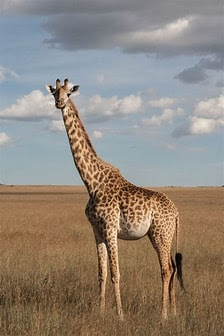
Whilst every creature represents God and communicates aspects of His essential attributes, we are alone in being made “to the image of God” (Genesis I 27, 1st lesson Holy Saturday). This entirely shapes our relationship with our fellow-creatures as their relationship with God is mediated through humanity, and our relationship with Him is determined by our relations with them. As God addresses us in them, He does not address us, His created audience, in the first instance; rather, He addresses Himself through us – he does not say “I giraffe you” but “I giraffe Myself through giraffing you” as human and giraffe are held in the heart of the Most Blessed Trinity and it goes deeper than that as the image of God in humanity brings the giraffe into the very centre of our being, our human nature. That which is in God is reflected in us, and that includes the idea from which each creature receives its nature, hence Adam knew the beasts and fowls by name as God brought them before him, and God related to them through Adam’s knowledge of them: He “brought them to Adam to see what he would call them; for whatsoever Adam called any living creature the same is its name” (Gen. II 19, Septuagesima Tues. Matins 2nd lesson). St. Robert Southwell writes:

“Man’s mind a mirror is of heavenly sights,
A brief wherein all marvels summèd lie”.

Thus, in the fall of Adam, the entirety of the corporeal creation fell, and all creatures are redeemed in the sacred humanity of Christ save only those rational creatures, people and angels, who wilfully reject redemption. It was, of course, in the fall that our ability to assimilate that which is communicated to us through our fellow-creatures was impaired to the extent that we are able to perceive so little in our ordinary dealings with them.

We are, however, able to relate to them, and through them to God, through our meditation upon them in the light of our ideas, our mental and moral concepts, and the powers of the soul, in which that which is in God, their creator, is reflected in us. In doing so we act in accordance with our primary vocation to participate in and to show forth the divine action, to ‘have dominion’ over other creatures by sharing in the action of the Lord. Thus, when we think about our fellow-creatures, whatever their species or nature, whether human, animal or inanimate, and whether considered in the concrete or the abstract, the particular or the generic, what we think about is our own nature, the nature of things, and the nature of the Creator of all that is. This meditation is conducted in a perfectly natural fashion by all of us as it is of our nature to act thus, even subconsciously, and when we imitate our Creator in this way, we find in ourselves the echo of this action as, in John Crowe Ransom’s words, “out of so simple a thing as respect for the physical earth and its teeming life comes a primary joy, which is an inexhaustible source of arts and religions and philosophies”. As we see that the created order is very good, goodness begets in us the desire to communicate goodness (which is, theologically speaking, a motion of grace, the action of the Holy Ghost), and so the artistic impulse is born; and in the image of the Creator we create, not, as He does, ex nihilo but from His creation and the image of it He created in us. In the practice of the arts we take possession of the world, and we take possession of ourselves, of the image of the divine that constitutes us as human. In his ‘Letter to Artists’ St. John Paul II tells us that “Every genuine art form in its own way is a path to the inmost reality of man and of the world. It is, therefore, a wholly valid approach to the realm of faith, which gives human experience its ultimate meaning.”

To understand the arts in this light is to grasp a sense of purpose from which a scale of aesthetic values may be extrapolated; and that enables us to pass an objective judgement, giving a context to the subjective reactions we feel when confronted with the artistic endeavours of others. Art may be good or bad, it may succeed or fail in its own terms, precisely as art. I ought, perhaps, to mention at this point that 2013’s Reith lectures were on the subject of art and were delivered by Grayson Perry, but this essay-article is neither a commentary upon nor a response to his talks, which are worth reading if you did not listen to them. The only comment I will make is that he was dealing with the visual arts whilst I am discussing the arts in general, and that much of what he has to say is really concerned with comparatively superficial questions of public attitudes towards art and artists rather than the philosophical and theological issues under consideration here.

To be continued...

By Prayer Crusader St Philip Howard


Monday, 14 February 2022

A Synod for the media or the Church?


Orthodox Catholics should get involved in the Synodal Journey

Here are some thoughts on what this synod is all about:

As Christians we are called as an act of charity to welcome and accept everyone, however the key word is "Christian". A Christian is a disciple of Jesus Christ and a disciple therefore must be disciplined in the ways and teachings of the Catholic Church.

What is true Christian Love and Charity?

Charity toward all mankind no matter who or what they are is what I believe to be the governing factor in how the Holy Spirit is moving us. However, what is the best way to show true love and welcome all into the Church?

If we do not remain true to the faith will the Church die?

It has been noted many times that when the Catholic Church or any other Church does not follow the teachings of Jesus Christ and His Church it loses members and closes churches. This can be seen very clearly in the Anglican church; the ordination of women and an acceptance of homosexual acts has not made this denomination attractive particularly to the young but has repulsed many of them. The Methodist church as well has been split down the middle by actually carrying out same-sex blessings and again have had to close churches and lost members. The Anglican Church plan to close 400 churches in the next decade, they have closed 1000 in the last 30 years, this church used to claim 40% of England population it is now down to 12%.

How can the Church truly welcome and accept everyone?

The Catholic Church can show that it welcomes and accepts everyone by being faithful to the Gospel of Jesus Christ and teachings of His disciples. Jesus said, "go forth and teach all nations." Some translations of Matthew 28:19 says, "Make disciples of all nations". Therefore, we are asked by Jesus Himself to teach and make disciples of all people, to be a disciple one must be disciplined and follow the teachings. Therefore, we can only truly love, teach and welcome everyone into the Catholic Church by being faithful to her teachings, including by following her teachings on an all-male priesthood, that homosexual acts cannot be accepted and the teachings on contraception and abortion must be affirmed. The liturgy too must be respectful and create a sense of the sacred whether in the New Rite or the Traditional Latin Mass. Traditionis Custodes should be modified or abandoned as it gives the impression that faithful Catholics who have an attachment to the Latin Mass are not welcome and accepted. I believe that the Holy Spirit is showing us by the huge growth in people (particularly young people) attending the Traditional Latin Mass that this liturgy and traditional family values are the way forward for the Church.

What is true Christian welcoming and acceptance?

Homosexuals in the Priesthood have caused great harm. This is not an assertion but a fact, for in study after study where the Church has been in crisis due to child sex abuse has shown that over 80% of the abuse has been of a male-on-male nature therefore homosexual. Studies throughout the world particularly in England, France, Germany, and the USA have proved this, therefore Homosexuals should not be allowed into the priesthood, even if they are celibate for Jesus says in the Lord's prayer "lead us not into temptation". And yet women or married priests are not the answer as Jesus our great high priest was a celibate man as were all of his apostles. The blessing of same-sex couples in Catholic Church as proposed by the German church is not compatible with both the Old and New Testaments and the entire 2000-year history of the Catholic Church.

If the Synod on Synodality does anything, it should correct the German Synodal way, and expose those ideologues as heretical and damaging to the Church. The German Church appears to have too few faithful Catholics and too much money which is raised through the secular tax system. A Church that has corrupted the teachings of Jesus Christ and His Church is not welcoming and accepting but on the contrary repulsive. It is a true act of Christian charity and love to be faithful to the teachings of the Church and not of the world.

Here is the link to the Bishop's Conference of England and Wales website for the Synod Contacts, please see who your contact is:

https://www.cbcew.org.uk/diocesan-synod-contacts/


Here is the Christian Rising video in which we discuss the Synod: 

https://www.youtube.com/watch?v=BcnVnyLsDYs


Here is their hideous (rainbow flag resonating) logo: